UART Spotlight: Lyn Asselta
For artist Lyn Asselta, landscape is more than a subject—it is memory, emotion, and a lifelong dialogue with place. For over three decades, her award-winning pastel paintings have explored timeless, rugged environments, from fog-softened coasts to sunlit marshes, shaped as much by experience as observation.
For artist Lyn Asselta, landscape is more than a subject—it is memory, emotion, and a lifelong dialogue with place. For over three decades, her award-winning pastel paintings have explored timeless, rugged environments, from fog-softened coasts to sunlit marshes, shaped as much by experience as observation. Her work reflects not just what she sees, but how those places have shaped her inner world.
Lyn is a Pastel Society of America Master Pastelist and an IAPS Eminent Pastelist, with work exhibited across the United States and abroad. She is also a dedicated educator, traveling widely to teach workshops that encourage artists to connect more deeply with their own experiences of landscape and light.
In this interview, Lyn shares her thoughts on art and teaching. We invite you to settle in and enjoy the conversation.
To learn more about Lyn’s upcoming UART workshop in spring 2026, as well as her other workshops and events, explore her newly published book Saturdays—Observations at the Intersection of Life & Art, or subscribe to her weekly Saturday morning newsletter, visit www.lynasselta.com and follow along as her journey continues.
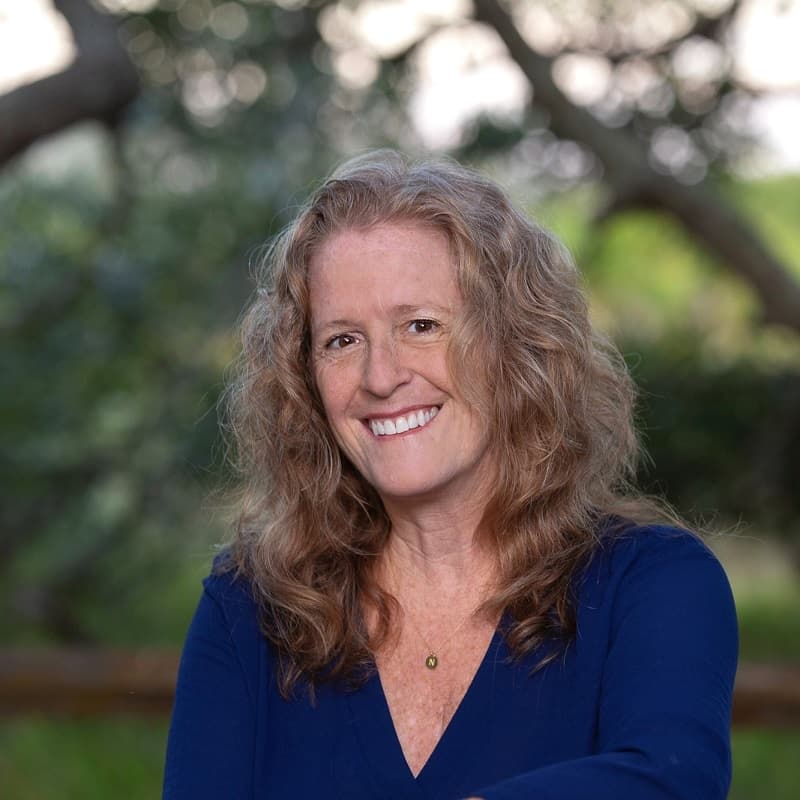
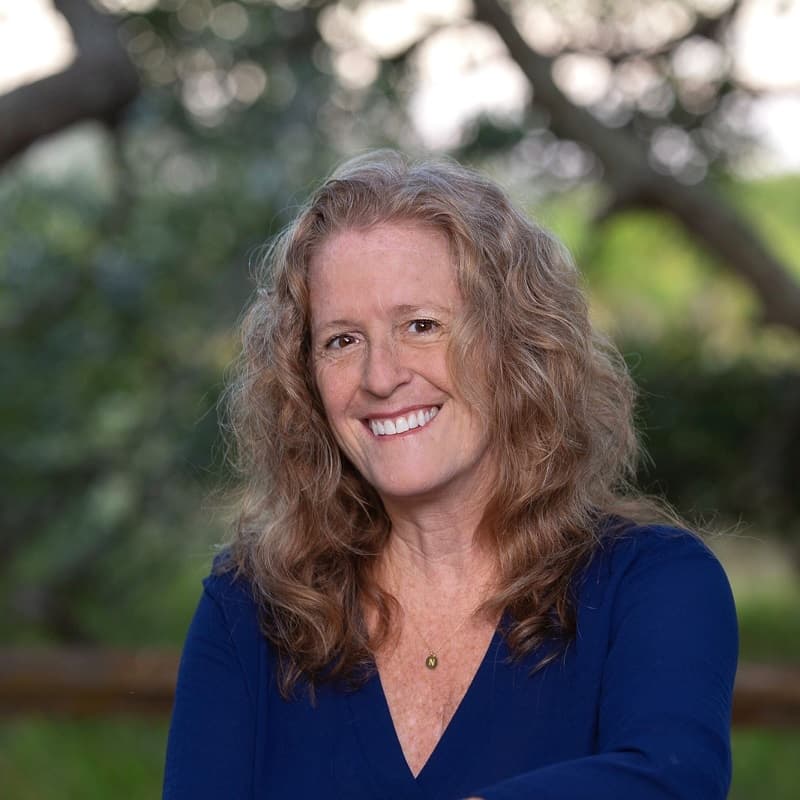
Lyn Asselta
https://www.lynasselta.com/ UART
UARTWhat drew you to pastels over other mediums and what keeps you loyal to them?
I think for me it’s the whole tactile notion of them. You know your hand is directly involved in the process of the painting and I love that.
I did calligraphy and I love the fact that I can put a pastel stick on its side and sort of manipulate the stick in almost the same way as the nib on a pen. So, I can make thicker marks or thinner marks, bolder older marks, or maybe a softer marks, but I love that whole idea of holding the stick in my hand. I think that’s what keeps me using them, really.
UARTHow do you choose which subjects lend themselves best to pastel textures?
I don’t.
I think that my favorite challenge with pastels is figuring out which paper to use to create what it is that I want to say. So, if maybe I’m painting a field where there’s a lot of texture, like grasses or such, or I’m painting rocks that are rough and bumpy, I like being able to choose a paper that works to help me create that texture with the pastels that I’m using. So, I kind of take that in reverse and instead of choosing a subject because the texture will happen with pastel, I’ll choose the subject because I really like it, and then I’ll use my pastels and my paper in combination to create that texture.
I think it’s more of a challenge that way. I like the idea of trying to figure out how to create the illusion of different textures.
UARTDo you think in layers when you paint, or do you think in colors first?
I actually think all the time in layers. I’m always looking at the shadows that I see in between things as my initial layer, and so I tend to lay down that layer first for most of my paintings.
I will often make a monochromatic underpainting. The colors vary. Whether I do a big dark underpainting or a lighter underpainting varies, but I tend to look at that as the sort of the shadow layer and I build off of that.
I’m always thinking about building from dark to light in a sense, but I’m also thinking about the way that when you layer color, that color becomes a whole lot more sophisticated than if I just pull it out-of-the-box. So, I’m always thinking about how I can add another layer to either bring more light into the color or to drag it off into shadow or to change the saturation of the color.
But I’m thinking in terms of layers all the time.
UARTWhat is the most unexpected tool you've ever used with pastels?
I really don’t use anything different. Usually, I am super basic. I use my pastels. I use whatever liquid medium I need to work them around a little bit. If I have to scrape off some pastels, I’ll use a palette knife. But aside from that, I think that’s about it.
I wish I had something to tell you. Like, you know, I have a shoelace that I use all the time. I have nothing like that.
UARTHow do you decide when to blend and when to leave the raw pastel strokes visible?
I think that for me it is entirely the decision of the painting. I don’t blend a lot. So, if I am blending, I’m using a hard pastel over a soft pastel and I’m kind of just sliding it over if I’m working on a really big piece. Sometimes I’ll use the side of my hand and just run it quickly over the painting. Rather than blend, a lot of times, I’ll just build up the pastel and it’ll be thicker in some places than it will in other places to get that effect.
I use the underpainting a lot, too. If the paper and or the underpainting shows through, it’s all a matter of whether it’s working or not as I’m building up the painting. That’ll very often determine whether I leave raw strokes visible. I’ll have a lot of paper showing through in some of my paintings, but it’s only because as I’m stepping back from the painting, it’s actually working in there. So if the painting seems to be moving along and the paper color works with what I’m doing, I’d absolutely leave some, but it all depends on what’s happening with the painting. Sometimes the blending is just to soften edges and I’ll notice these areas as the painting is developing.
UARTIs there a particular pastel stick or shade that feels like a signature color?
There used to be. Faber Castell used to have a Polychromos hard pastel stick that was sort of an Indigo color, and I loved that color and used it a lot. I could use it for underpainting. I could use it to sort of slide over the top of other colors to darken them just a little bit, but it’s almost impossible to find that stick anymore. I’m fairly sure they stopped making individual sticks with that color. That was the one I used often, so now I’m sort of without a signature color.
I do find that I like a pinky-peachy color over a lot of things. I think it’s just because of the air here (where I live on the coast). In the afternoons especially, the atmosphere sort of lends itself to that color. And so I do find myself using that quite a bit now. It’s a really, really pale warm orange.
UARTWhat role does paper texture play in the emotion or atmosphere of your pieces?
I think paper texture plays a big role in emotion, especially in a landscape painting. When you have a paper that has a fine grit to it, you can get a harder line. And if you’re trying to create a dry, crisp day, those sharp lines are important, whereas a 320 is grittier and you don’t get those really hard edges as much.
So I tend to use a 400 or a 320 grade if I’m painting a foggier day or a day with a lot of haze in the atmosphere. I think depending on what you’re trying to achieve, the paper texture has a lot to do with that atmosphere.
I can take that 320 grade paper and I can work on my painting and then just skim over a color. A good example is if I’m working on fog. A lot of people just assume that fog is a blue haze everywhere. But when I use a 400 or a 320 grade sanded paper, I can develop my painting and then I can take a warmer color and slide it over the top just slightly. The warmth on top of all that cool makes it feel like there’s depth in the air.
And it happens because I can put a really fine layer of pastel that’s just skimming the top edges of those pieces of grit.
UARTDo you ever intentionally let the paper color show through as part of the final composition?
Not intentionally, but again, if the painting can utilize it, I will. That’s a lot of the reason why I like UART so much, because especially where I live here in Maine and with the things that are in the landscape here, the raw color of the paper can be really useful. It sort of unifies things if I let it pop through in different places. It’s a nice compliment to the colors and textures that I work with here so often.
UARTWhat challenges of this “messy”, hands on medium do you secretly find the most enjoyable?
The challenge of making a really big painting! When you’re working on something that’s like 30” x 30” or 40” x 40”, it’s this huge challenge and you’re putting small bits of color here and there and everywhere, and you’re layering and layering and it’s just this gigantic puzzle.
You put one piece of color down and then you’re trying to find the next piece and you’re trying to find the next piece after that and then you suddenly realize that maybe the first piece of color that you put down didn’t quite work. So, you have to redo that, you know, and it’s just building and building and building. And so, I think working large kind of intimidates people in a way.
Challenge-wise for me, I love it. I absolutely love that challenge of a really big painting and just taking my time and letting it build and letting all those colors come together.
UARTWhat advice would you offer other artists who are beginning to explore pastels?
Try everything. Literally everything. Try every paper you can find, every grit you can find, every pastel stick you can find. Hard, soft, everything in between. Because one of the things I tell my students a lot is that everybody’s hand is different and everyone will make marks on the paper in different ways.
I think the most important thing that a beginner can do is to get a hold of as many samples of pastel and paper that they can find and keep trying them out until they figure out what their hand is capable of. I think everybody’s hand hits that paper a different way. Some people are really heavy-handed, some people are not. Certain pastels are going to work with certain papers in a way that’s better for some people than it would be for others. So just experiment with as many different things as you can find.
UARTOkay, now this is your last question: just for fun. If you could instantly master any skill completely unrelated to art, what would it be and why?
This is embarrassing. Anything at all to do with music. I would love to be able to immediately know how to sing. But I can’t carry a tune to save my life. So, there it is. It’s all out there in public now. Nobody’s ever going to hear me singing in a car with them.